Soras Tech
1. The Strategic Role of Multimode Fiber Systems in Enterprise Infrastructure
In the era of hyper-scale cloud computing, artificial intelligence (AI) clusters, and rapid edge node deployment, selecting the right transmission medium is crucial. While single-mode fiber (SMF) dominates long-haul telecommunication sectors spanning kilometers, Multimode Fiber (MMF) remains the vital backbone for short-range high-bandwidth networks, private server infrastructures, and commercial local area networks (LANs).
Multimode fiber’s larger core diameter (typically 50 μm or 62.5 μm, compared to single-mode's 9 μm) allows for the propagation of multiple light modes. This core design significantly simplifies light source alignment, enabling the use of cost-effective Vertical-Cavity Surface-Emitting Lasers (VCSELs) and Light Emitting Diodes (LEDs) rather than expensive, highly precise single-mode laser diodes. Consequently, deploying multimode architectures drastically lowers the overall capital expenditure (CAPEX) for transceivers and active interface equipment.
2. Understanding Multimode Standards: From Legacy OM1 to Laser-Optimized OM5
For international purchasing managers, understanding the generational divisions in MMF standards is essential for matching technical specifications with cost constraints. The classification spans from standard OM1 to highly optimized OM5:
| Fiber Type | Core Diameter (μm) | Light Source Type | Max 10G Link Length | Max 40G / 100G Link Length | Primary Industrial Applications |
|---|---|---|---|---|---|
| OM1 (Legacy) | 62.5 | LED | 33 meters | Not Recommended | Legacy campuses, low-bandwidth industrial control |
| OM2 (Standard) | 50 | LED | 82 meters | Not Recommended | Local corporate backbones, mid-tier building links |
| OM3 (Laser-Optimized) | 50 | VCSEL (850 nm) | 300 meters | 100 meters | Enterprise data centers, FTTH hubbing, patch links |
| OM4 (Ultra-Performance) | 50 | VCSEL (850 nm) | 400 meters | 150 meters | Hyperscale data centers, server farm switch aggregation |
| OM5 (Wideband MMF) | 50 | VCSEL (850-953 nm) | 440 meters | 150 meters (using SWDM) | Multi-wavelength (SWDM) high-speed transceivers, AI networks |
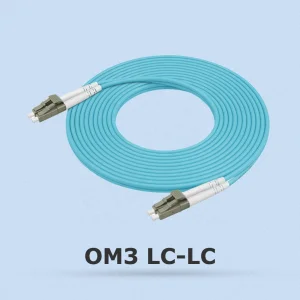
Choosing the right grade depends heavily on future-proofing. As seen in our product lineup, products like the OM3 Multimode Dual-fiber FTTH Patch Cord provide the optimal sweet spot for modern network hubs. They offer excellent bandwidth headroom for 10G/40G configurations while keeping cost structure low.
3. Global Industrial Scenarios & Demand Vectors for Multimode Fibers
The global demand for optical transmission equipment is driven by several key technological trends:
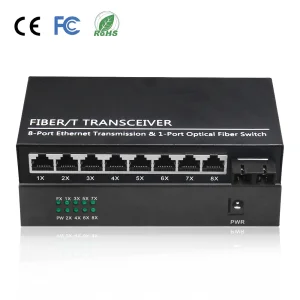
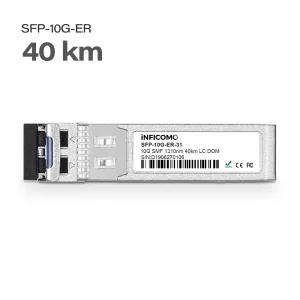
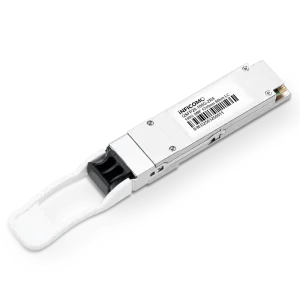
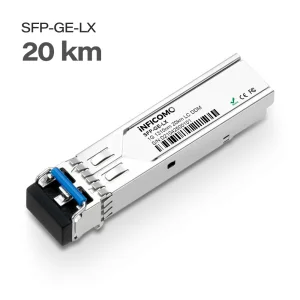
- Data Centers and Cloud Infrastructure: Hyperscale and colocation facilities rely on OM3, OM4, and OM5 fibers to connect top-of-rack (ToR) switches to leaf switches. In these environments, transceivers like our 10G SFP+ modules and 100G QSFP28 components bridge the physical gap with zero packet loss and minimal latency.
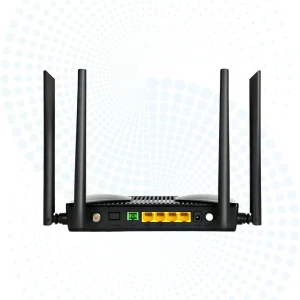
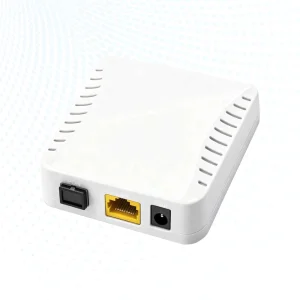
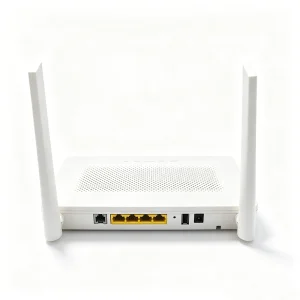
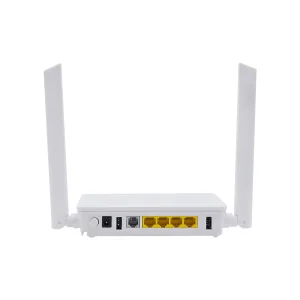
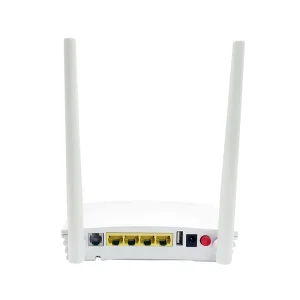
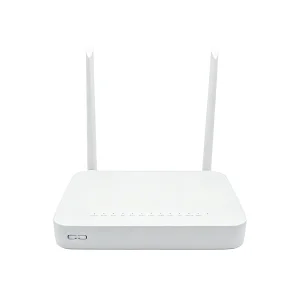
- Fiber-to-the-Home (FTTH) and Telecom Rollouts: High-density urban areas rely on Optical Network Units (ONU) and Optical Line Terminals (OLT) to deliver fiber broadband. Products like our dual-band PT939G XPON GPON ONU and EG8145V5 play critical roles in terminating residential high-bandwidth connections.
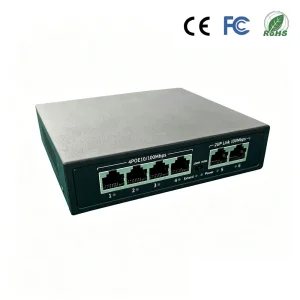
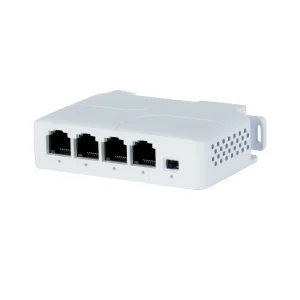
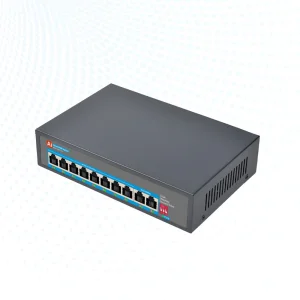
- Industrial IoT and CCTV Surveillance: Modern automated production plants and city-wide security systems utilize heavy machinery and experience electromagnetic interference (EMI). Implementing fiber systems, utilizing Din-Rail mounted POE Extenders, and deploying AI VLAN PoE Switches ensures uninterrupted data transmissions despite high EMI.